 Customer Service: (253) 677-0290
 Customer Service: (253) 677-0290
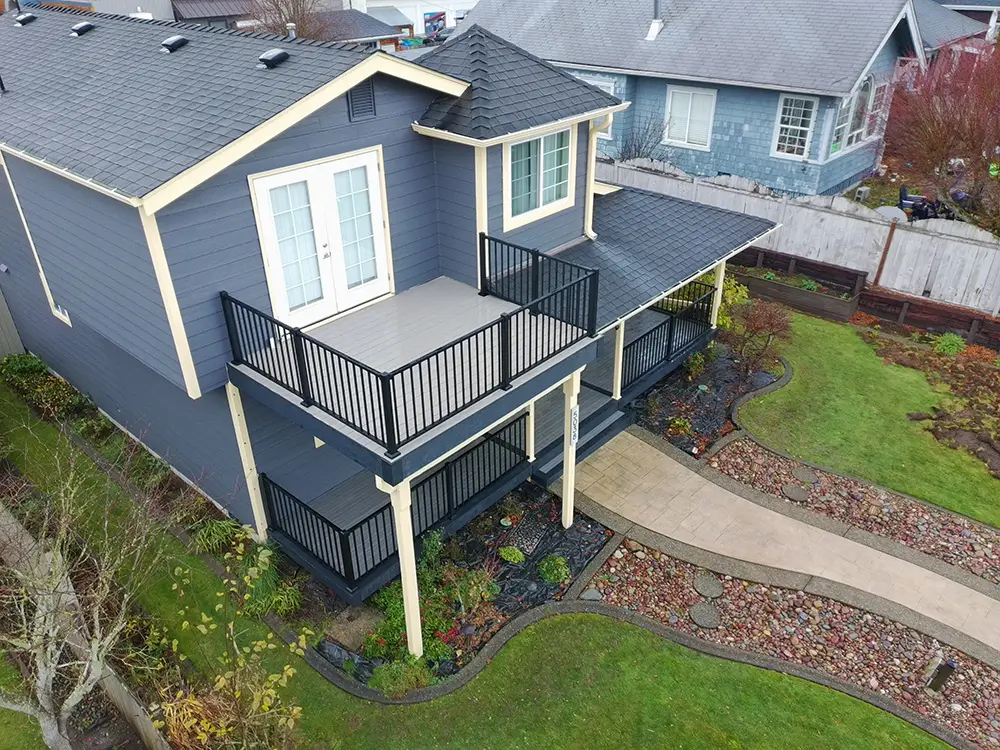
By Daniel Rotaru, Owner and CEO at Decks Restore. WA Contractor License # CC DECKSRL797P2.
I get asked a version of this question almost every time I drive across the Narrows. A homeowner in Gig Harbor sees a deck I built for a neighbor in Tacoma, likes it, and wants the same thing. Same boards, same railing, same price. Then I walk their lot, see how close they sit to the water, and have to explain why their build is going to cost a little more and use different metal underneath. It is not a sales pitch. It is the difference between a deck that lasts twenty years and one that starts rusting at the joist hangers in year six.
Tacoma and Gig Harbor are maybe twenty minutes apart. The rain is basically the same. The building codes are close. But if your deck sits within a few hundred yards of saltwater, the air it breathes every day is doing something to your hardware that an inland Tacoma deck never has to deal with. After years of building on both sides of the water, here is what actually changes and what does not.
Rain rots wood. Everyone in the Pacific Northwest knows that, which is why we already build inland Tacoma decks with treated lumber and proper flashing. Salt air is a different problem. It corrodes metal. The salt hangs in the air, settles on every fastener and bracket and screw head, and slowly eats through the zinc coating that is supposed to protect them. Once that coating is gone, the steel underneath rusts fast.
That matters because the metal is the part of your deck you cannot see and cannot easily replace. The boards on top are the cheap, visible layer. The joist hangers, post bases, ledger bolts, and structural screws are what hold the whole thing together and keep it from pulling away from your house. When those fail, you do not get a cosmetic problem. You get a safety problem. I have torn apart waterfront decks where the boards still looked fine but the hangers had turned to orange flakes.
One honest caveat here. Gig Harbor is not Ocean Shores. We are on Puget Sound, not the open coast, so the salt spray is gentler than what a house takes on the actual shoreline. A deck a mile inland in Gig Harbor faces almost the same conditions as one in central Tacoma. The closer you are to the water, and the more wind you get coming off it, the more this all matters. So the real question is not which town you live in. It is how far your deck sits from the saltwater.
For a standard inland Tacoma deck, hot-dipped galvanized hardware is the right call. It handles our rain and humidity well, and it keeps the cost reasonable. I use it on most of the builds I do across Pierce County and it holds up.
For a Gig Harbor deck close to the water, galvanized is the wrong choice for the long haul. The salt breaks down the zinc coating, and once that happens the connection is on borrowed time. On waterfront jobs I switch to stainless steel fasteners and connectors, specifically the grades rated for marine and coastal use. They cost more. Sometimes a lot more. But they are the only thing I trust to hold a deck together for decades a few hundred feet from saltwater.
The same logic applies to flashing, the metal that keeps water out of the connection between your deck and your house. Inland, standard flashing is fine. On a salt-exposed build I want stainless steel or another corrosion-resistant material there too, because a flashing failure at the ledger is one of the most expensive problems a homeowner can end up with. It lets water into the wall of the house, not just the deck.
| Component | Inland Tacoma deck | Gig Harbor waterfront deck |
|---|---|---|
| Fasteners and screws | Hot-dipped galvanized, coated deck screws | Stainless steel rated for coastal use |
| Joist hangers and post bases | Galvanized structural connectors | Stainless or marine-grade connectors |
| Ledger flashing | Standard corrosion-resistant flashing | Stainless steel flashing |
| Surface boards | Wood or composite, homeowner’s choice | Composite or PVC leans ahead of wood |
The boards matter less than the metal, but they still matter. On an inland Tacoma deck I am genuinely happy to build in wood if that is what a homeowner wants. Cedar and treated lumber look great and, with regular sealing, last a long time here. I have written before about why so many Tacoma homeowners still lean toward composite in our climate, but wood remains a real option inland.
Close to saltwater, the calculation shifts. Wood near the coast needs more upkeep, not less, because the salt and constant moisture work on the finish faster. Composite and PVC boards do not absorb that moisture the way wood does, so they tend to be the easier long-term choice for a waterfront home. That said, plenty of Gig Harbor homeowners love the look of real timber and are willing to maintain it, and I am happy to build that too. If you go that route on a wood waterfront deck, the upkeep is the trade you are signing up for. There is no maintenance-free wood deck near the water, and anyone who tells you otherwise has not pulled one apart at year ten. I still think there are real benefits to a wood deck in Gig Harbor if you go in clear-eyed about the maintenance.
I do not want to overstate the differences, because a lot of the build is identical. The footings, the framing layout, the joist spacing, the railing height and baluster spacing for code, the permit process with the city, the structural engineering on an elevated deck. None of that changes because you moved twenty minutes west. Good framing is good framing. A deck that is built square, anchored properly, and drained correctly is the goal whether you are in the Stadium District or out by the harbor.
The waterfront adjustments are real but targeted. They live in the hardware, the flashing, and the material conversation. Everything else is the same craft I bring to a build anywhere in Tacoma or Gig Harbor.
This is the part I push on hardest, and it applies no matter where your deck goes. A waterfront build is more expensive and more technical, which makes it exactly the kind of job an unlicensed handyman will quote cheap and build wrong. Before you sign anything, verify the contractor’s license. Washington makes this easy and free through the Department of Labor and Industries. You can look up any contractor on the L&I Verify tool and confirm they are registered, bonded, and insured. If a builder cannot give you a license number, that is your answer.
Our number is CC DECKSRL797P2, and you are welcome to run it.
Building near the water in Gig Harbor, or inland in Tacoma? I will walk your property, look at how close you sit to the saltwater, and give you an honest material and hardware plan with a written quote. No salespeople, no subcontracted crews. Request a Free On-Site Estimate
About the author. Daniel Rotaru is the owner and CEO of Decks Restore, a licensed and insured Washington State deck builder (WA LIC # CC DECKSRL797P2) serving Tacoma, Gig Harbor, Federal Way, Puyallup, and the wider South Sound. He has spent his career building custom wood and composite decks engineered for the Pacific Northwest, from inland Pierce County backyards to waterfront homes on Puget Sound.