 Customer Service: (253) 677-0290
 Customer Service: (253) 677-0290
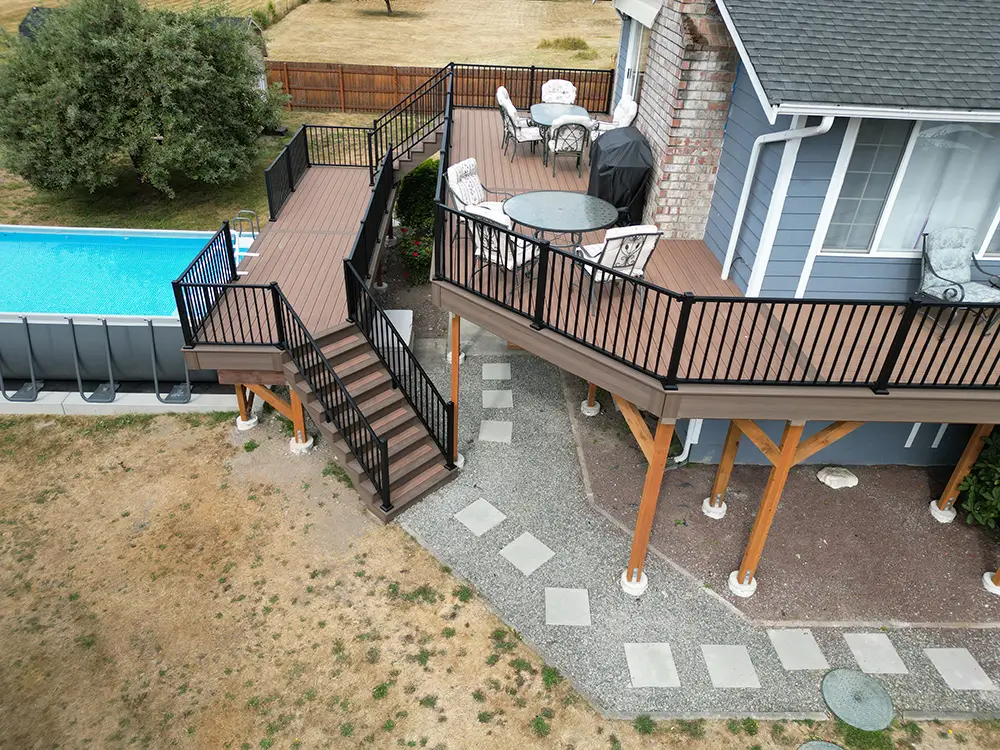
Building a deck is supposed to be about summer BBQs and morning coffee, but before you pick out the cedar or composite, you’ve got to deal with the “fun” part: paperwork. If you’re tackling deck building DuPage County, IL style, you’ll find the vibe is quite a bit different than out west in Pierce County, WA. While the wood stays the same, the local “rules of the game” change the moment you cross state lines. Here is the “real talk” version of how these two spots handle your backyard dreams.
This is the first question everyone asks, usually while hoping the answer is “no.”
In DuPage, the philosophy is pretty much: If you’re building it, we probably want to see the plans. * The Reality: Whether it’s attached to the house, freestanding in the yard, or just has a couple of built-in lights, you’re almost certainly pulling a permit.
Washington takes a more “mind your own business” approach—to a point.
The building codes in both places are designed to keep you from falling through the floor, but they’re worried about very different “villains.”
In Illinois, the enemy is frost heave.
In Washington, the enemy is rot.
How much caffeine will you need to get through the application?
| Feature | DuPage County, IL | Pierce County, WA |
| Strictness | High. Almost everything needs a permit. | Moderate. Ground-level decks often skip the red tape. |
| Main Concern | Deep footings for freezing winters. | Water-proofing and slope stability. |
| Process | Very “by the book” and standardized. | Variable; depends heavily on your specific lot. |
The Takeaway: If you’re in DuPage, just assume you need a permit and start the paperwork early. If you’re in Pierce, you might get lucky with a low-profile freestanding deck—but if you have a slope or a second-story view, get ready to talk to an environmental specialist.
Either way, doing it right the first time beats a “Stop Work” order stuck to your back door any day!